Project starter kits
Opinionated file structures for Claude Code, Codex, Hermes-style orchestration, and multi-agent engineering workflows.
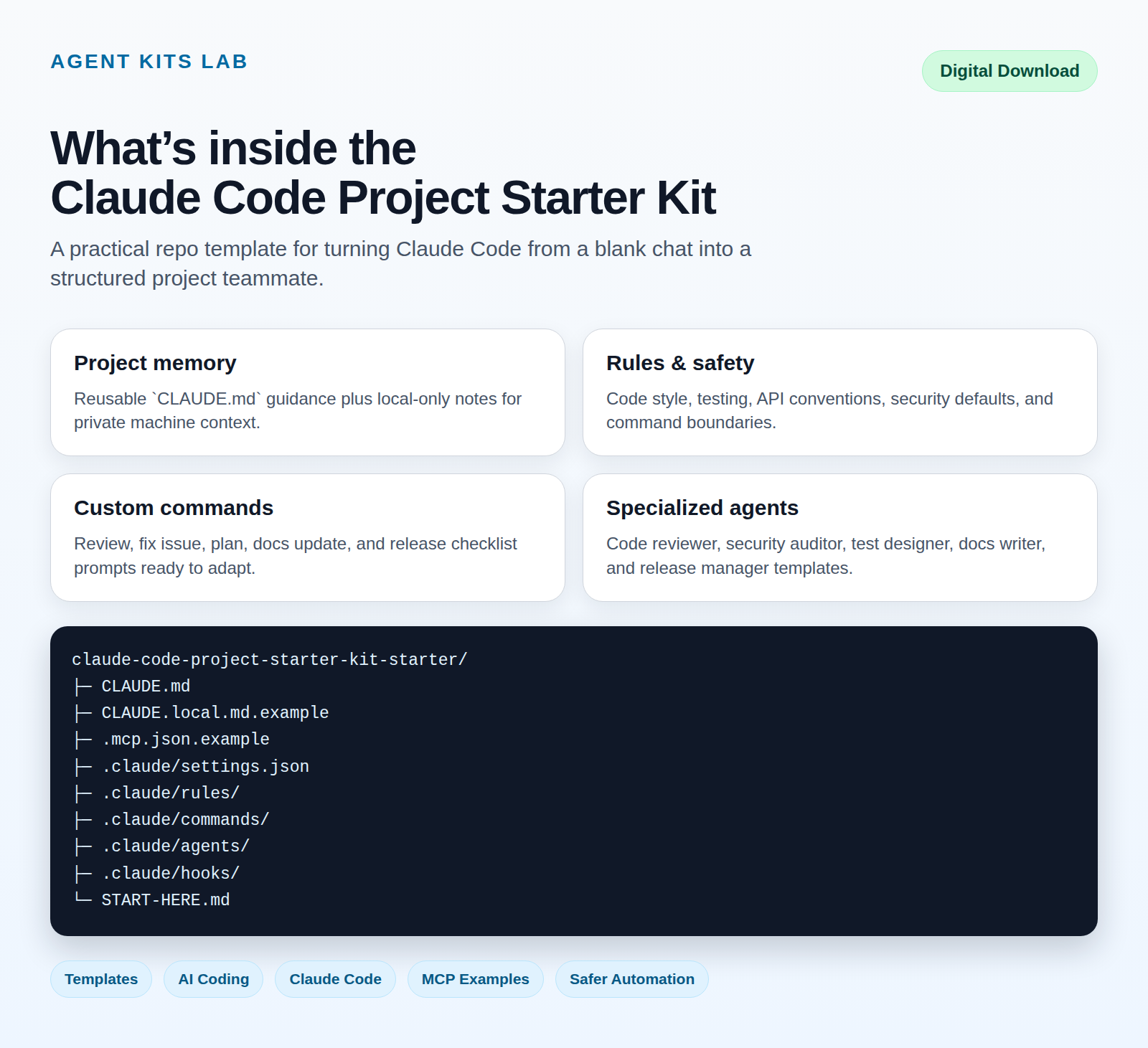
A copy-ready starter system for turning a blank AI coding chat into a repeatable project teammate: project memory, rules, commands, agents, hooks, and MCP examples.
claude-code-project-starter-kit/
├── CLAUDE.md
├── .mcp.json.example
└── .claude/
    ├── settings.json
    ├── rules/
    ├── commands/
    ├── agents/
    ├── hooks/
    └── skills/
Small, auditable workflow assets that help teams move from ad-hoc prompting to repeatable agent-assisted execution.
Opinionated file structures for Claude Code, Codex, Hermes-style orchestration, and multi-agent engineering workflows.
Reusable coding rules, testing expectations, security boundaries, review commands, and release checklists.
Plain-language guides for using AI agents responsibly in software projects without overpromising outcomes.
Use the free repo to test the pattern. Buy the $9 ZIP when you want the complete, organized starter pack instead of assembling everything by hand.
7-day refund if it does not fit your workflow. Contact hello@agentkitslab.com with your order email.
CLAUDE.md operating guide templateSTART-HERE guideA repository-specific, evidence-anchored review of context, verification, tooling, and review paths for Claude Code, Codex, and similar coding agents.
One-time · scope confirmed before payment · target delivery within 5 business days after cleared payment and complete accepted intake.
Inquiry first—there is no public checkout link. Do not send credentials, tokens, private keys, source archives, or secret values in the initial email.
NOT_RUNThe free repo is for trying the workflow. The paid ZIP saves setup time when you want the complete project operating system.
| Asset | Free GitHub template | $9 Starter Kit |
|---|---|---|
| Project memory | ✓ Basic CLAUDE.md | ✓ Full operating guide plus local notes template |
| Rules | ✓ Core examples | ✓ Modular rules for style, testing, API, security, and docs |
| Commands | ✓ 2 examples | ✓ 5 repeatable workflows for review, planning, fixes, docs, release |
| Agents | ✓ 2 examples | ✓ 5 specialized reviewers and QA helpers |
| Hooks + MCP | Preview only | ✓ Safer bash hooks, post-edit reminders, MCP config example |
| Start guide | README only | ✓ START-HERE.md, product README, structure diagram |
No mystery box: the kit is a practical folder of copy-ready files you can adapt to a real repository.
Templates improve consistency, but you still review outputs, run tests, and adapt rules to your stack.
Focused templates and operating guides for teams that want clearer project context, safer reviews, and more repeatable AI-assisted development.
Copy-ready files, examples, and checklists that can be adapted to real repositories without starting from a blank page.
Public releases, account actions, payments, credentials, and customer commitments stay review-first.
Templates improve workflow consistency, but every team should still review outputs, run tests, and adapt rules to its own stack.